
Here’s why.
We spend a huge portion of our lives in chairs: at school, at work, in the car, on the couch. Instead of doing what the human body is built for (standing, walking, running, sitting on the ground), we sit in chairs. And when you spend years in a chair, your body adapts to it. The muscles on the front of your hip, the hip flexors, spend their days in a shortened position. The glutes, on the back side, spend their days switched off.
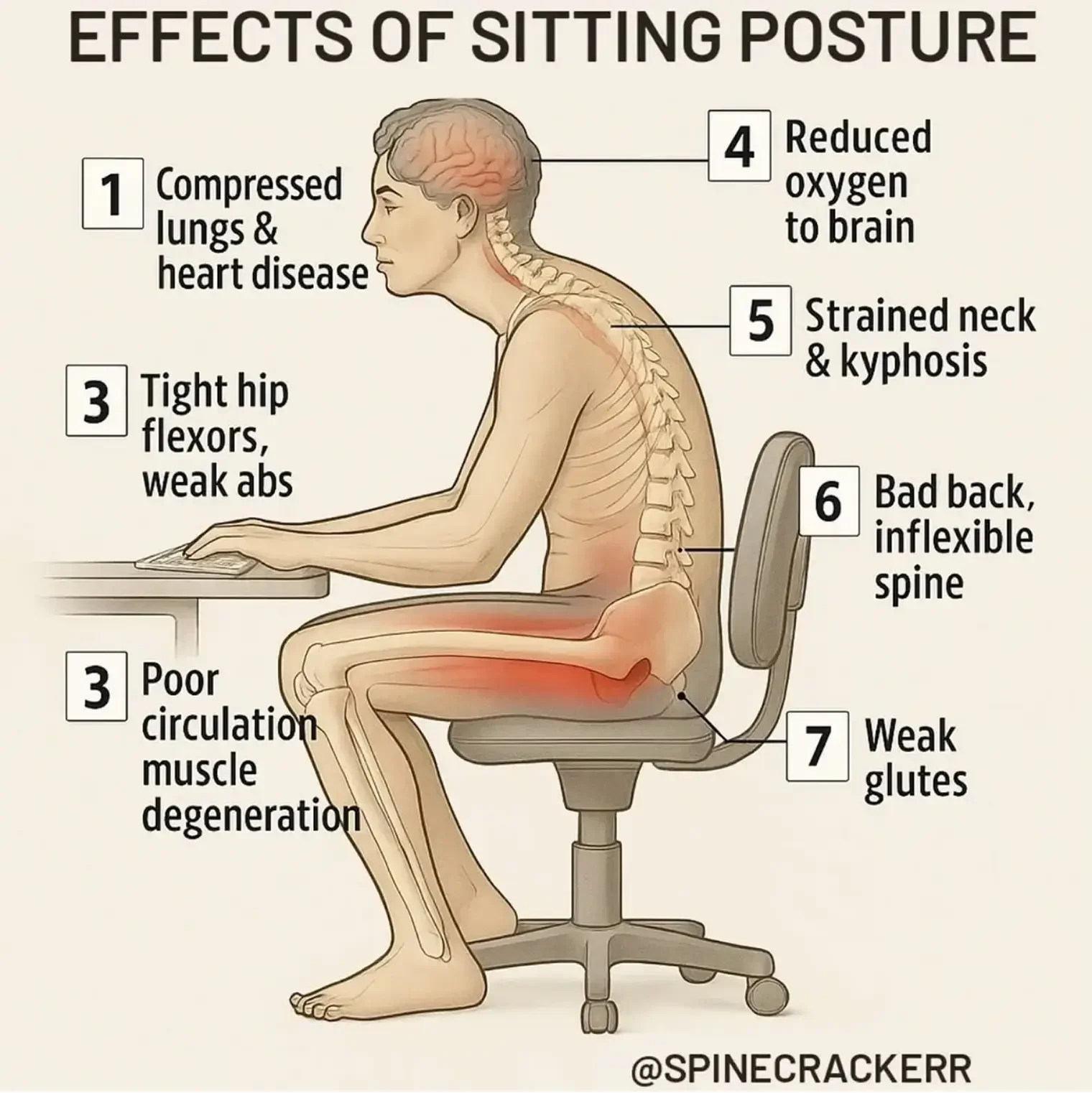
Why does that matter? The glutes are the biggest, strongest drivers of your hips. When they aren’t doing their share, other tissues pick up the slack, and the low back muscles are a common place for that load to land. The result is often a constant gripping or tightness in the low back, because it’s being asked to do work the glutes should be doing.
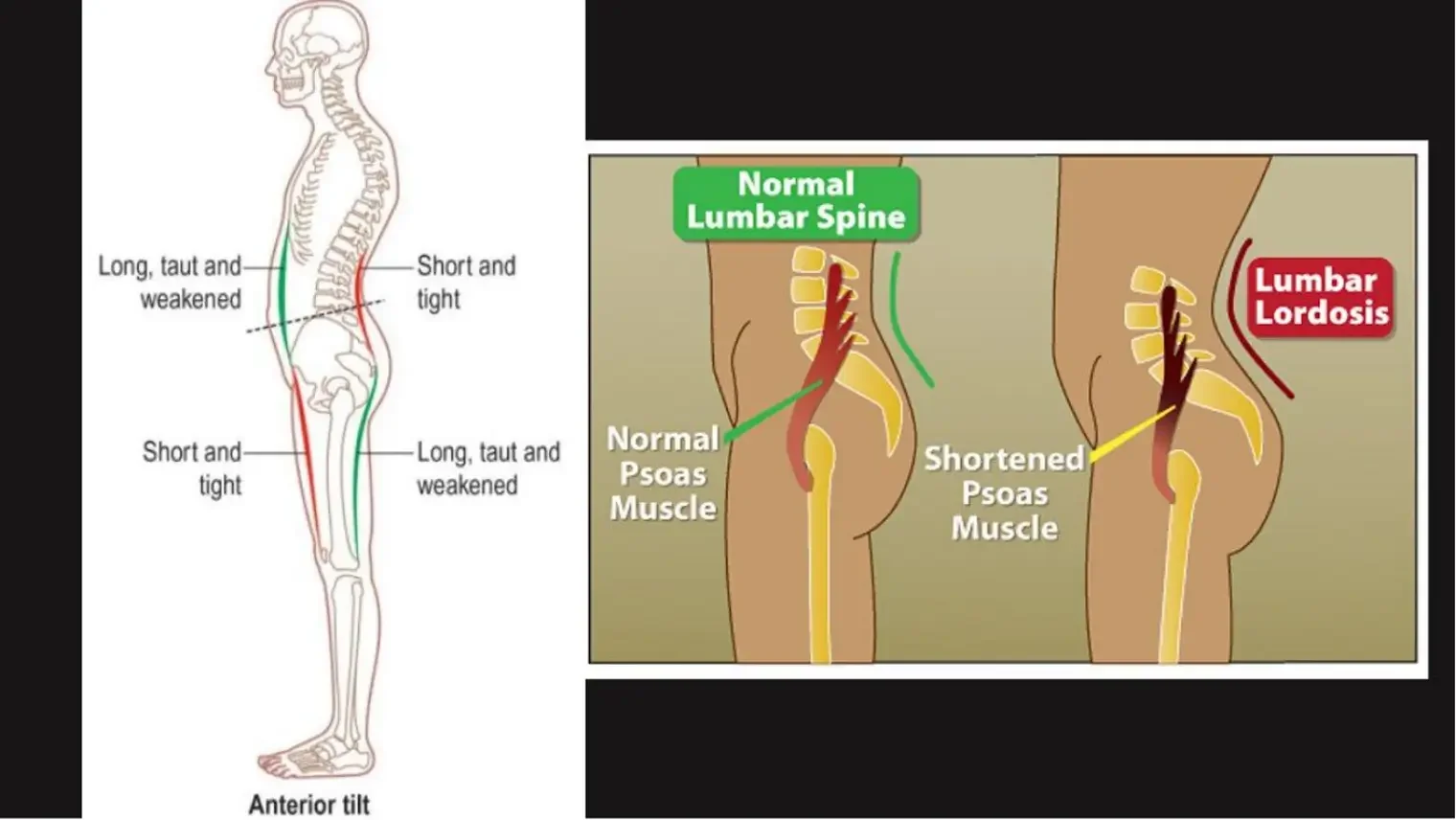
To be clear, this isn’t the only cause of back pain, and it isn’t the cause for everyone. Stress, poor sleep, sudden jumps in activity, and long stretches of not moving at all can all play a role. Conditions like disc problems and sciatica have their own causes and need to be evaluated by a medical professional. But if you sit a lot and your hips feel tight, this is one of the first things I look for.
When to see a doctor first
Skip the exercises and get medical help right away if you have:
Numbness or weakness in your legs
Changes in bladder or bowel control
Back pain after a fall, accident, or other trauma
Fever along with back pain
Severe pain at night that doesn’t ease with rest or position changes
Pain that is getting steadily worse, or that has lasted more than a few weeks without improving
How to start addressing it
Think of it as three jobs: open up the front of the hips, wake up the glutes, and build trunk strength so your low back doesn’t have to do everything.
Open the hips. Half-kneeling hip flexor stretch: kneel on one knee, tuck your tailbone under, and gently shift forward until you feel a stretch at the front of the kneeling leg’s hip. Hold for 3 seconds, ease back, and repeat for 15 to 20 reps each side. A few minutes of myofascial release on tight spots in the low back and hips can feel good too. Treat it as short-term relief that helps you move better, not as the fix itself.
Wake up the glutes. Glute bridge: lie on your back, knees bent, and drive through your heels to lift your hips. Squeeze at the top, then lower with control. Start with 2 to 3 sets of 8 to 20 reps. Once that feels easy, progress to single-leg bridges or weighted hip thrusts.
Build trunk strength. Pick two or three of these:
• Bird dog: 2 to 3 sets of 6 to 12 reps per side, pausing at the top
• Bird dog: 2 to 3 sets of 6 to 12 reps per side, pausing at the top
• Side plank: 2 to 3 holds of 20 to 40 seconds per sideMove more throughout the day. Walking is one of the best things you can do for a sore back. Break up long periods of sitting and get moving every 30 to 60 minutes.
Go easy at first. Mild muscle fatigue is normal. Sharp or worsening pain is a signal to stop and get checked out.
Low back pain isn’t one size fits all
Everyone’s back pain has a different story. That’s why I start every client with a movement assessment: how you stand, how your hips and spine move, and where you’re compensating. Sometimes tight hips and underworked glutes turn out to be the main issue. Sometimes they’re only part of the picture, and sometimes something else is going on entirely. Knowing which one you’re dealing with is what makes the work effective.
If you’re in Santa Monica and want to figure out what’s driving your back pain and build a plan to reduce it, click the link below to book an assessment.
5. BREATHING
How are you getting air during your sets? As with the two points above, there are some minor caveats, but in general there are two primary rules. First, you should inhale during the lengthening phase and exhale during the contraction. Second, breathe with your diaphragm rather than your chest. Almost every new client who walks in the door is doing the exact opposite for each – or just holding their breath altogether.
